| Od : | |
|---|---|
| Pre : | |
The Slovak Language - History and Its Relations to Other Languages
Monday 06 April 2009 | 6247 zobrazení | 0 komentárov Zväčšiť písmo | Zmenšiť písmo | Pridať k obľúbeným | Vytlač stránku | Poslať priateľovi | Rss
The Slovak language or Slovak (slovenský jazyk or slovenčina), sometimes referred to as „Slovakian“, is the official language of Slovakia.
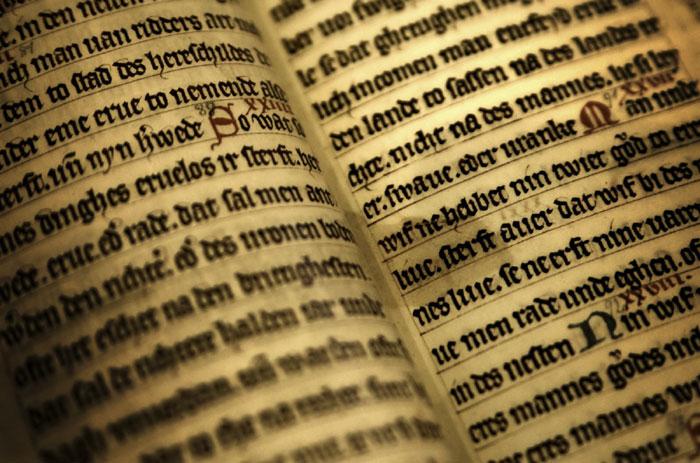
The Slovak language or Slovak (slovenský jazyk or slovenčina), sometimes referred to as „Slovakian“, is the official language of Slovakia. Slovak is written in the Roman (Latin) alphabet. Although there are traces of the Slovak language in Latin documents of the 11th–15th century and in the Czech of the 14th–16th century, the earliest-known steps to spread the use of written Slovak dated back to the 17th and 18th centuries, when Roman Catholics centred at the University of Trnava tried to introduce Slovak for use in their hymnal and church books. The language became accepted as a literary language only after a group, led by the Protestant Ľudovít Štúr (1815–56), began to write in the central Slovak dialects. The language of these writings, modified and codified by Martin Hattala in 1852, was rapidly accepted as standard.
The Slovak Language is an Indo-European language belonging to the West slavic languages spoken by about 5 million people in Slovakia and abroad (Hungary, Poland, Romania, Ukraine, Serbia, Croatia, Canada, the USA. The Slavic language varieties tend to be closely related, and have had a large degree of mutual influence, due to the complicated ethnopolitical history, which is reflected in many features Slovak shares with neighboring language varieties. Standard Slovak shares high degrees of mutual intelligibility with many Slavic varieties.
In addition to vocabulary common to the Slavic languages, a lot of significant non-Slavic elements have been incorporated into the Slovak lexicon. Among them Hungarian loanwords: „paprika,“ Slovak paprika, Hungarian paprika; „whip,“ Slovak korbáč, Hungarian korbács; and „dragon“, Slovak šarkan, Hungarian sárkány. Among German loanwords we can find: „coins,“ Slovak mince, German münzen; „to wish“, Slovak vinšovať, German wünschen; and „color,“ Slovak farba, German Farbe and many others...
;reklama;
Alphabet
Slovak uses a modification of the Latin Alphabet. The modifications include the four diacriticals (ˇ, ´, ¨, ^;) placed above certain letters.
The lexicographic ordering of the Slovak alphabet is very similar to that of English: A B C D DZ E F G H CH I J K L M N O P Q R S T U V W X Y Z. The complete alphabet, however, allows for characters with diacritics (the character with diacritics always comes after the same character without diacritics) and is as follows: a á ä b c č d ď dz dž e é f g h ch i í j k l ľ ĺ m n ň o ó ô p q r ŕ s š t ť u ú v w x y ý z ž. Note that dz, dž and ch are considered single letters and that ch follows the h (not the c). The letters „q“, „w“, „x“ are only used in loanwords, never in native Slovak words.
Orthography
The primary principle of Slovak spelling is the phonemic principle, „Write as you hear“. The secondary principle is the morphological principle: forms derived from the same stem are written in the same way even if they are pronounced differently. The tertiary principle is the etymological principle, which can be seen in the use of i after certain consonants and of y after other consonants, although both i and y are pronounced the same way. Finally there is the rarely applied grammatical principle, under which, for example, there is a difference in writing (but not in the pronunciation) between the basic singular and plural form of masculine adjectives, for example pekný (nice – sg.) vs pekní (nice – pl.), both pronounced [pekni:].
The accent (stress) in the standard language is always placed on the first syllable of a word (or on the preceding preposition, see below). This is not the case in certain dialects.
The acute mark (in Sovak „dĺžeň“, „prolongation mark“) indicates a long vowel, for example í = approximately /i:/. This mark may appear on any vowel except „ä“ (wide „e“, široké „e“ in Slovak). It may also appear above the consonants „l“ and „r“ (which, in such cases, are considered vowels).
The circumflex („vokáň“) exists only above the letter „o.“
The umlat („prehláska“, „dve bodky“ = two dots) is only used above the letter „a.“ It indicates a raised vowel, almost an „e“.
The caron (in Slovak „mäkčeň“, „palatalization mark“ or „softener“) in informal Slovak linguistics often called just „palatalization“.
Morphology
Articles (Členy)
There is no article in the Slovak language. The demonstrative pronoun ten (fem: tá, neuter: to) may be used in front of the noun in situations where definition must be made.
Relationships to other languages
In addition to vocabulary common to the Slavic languages of the region, significant non-Slavic elements have been incorporated into the Slovak lexicon. Slovak went through long periods of close contact with both Hungarian and German. Both languages have left their mark on Slovak vocabulary. Hungarian loanwords in Slovak include: „paprika,“ Slovak paprika, Hungarian paprika; „whip,“ Slovak korbáč, Hungarian korbács; and „dragon“, Slovak šarkan, Hungarian sárkány German loanwords include „coins,“ Slovak mince, German münzen; „to wish“, Slovak vinšovať, German wünschen; and „color,“ Slovak farba, German Farbe.
Dialects
There are many varieties of Slovak. These may be divided in four basic groups: Eastern Slovak dialects, Central Slovak dialects, Western Slovak dialects, Lowland Slovak dialects.
A few phrases you should know before you arrive in Slovakia:
Good morning. = Dobré ráno.
Good day. = Dobrý deň.
Good afternoon. = Dobré popoludnie.
Good evening. = Dobrý večer.
Good night. = Dobrú noc.
Good-bye. = Dovidenia.
Hello. = Ahoj.
Welcome. = Vitaj. Vitajte.
How are you? = Ako sa máš? Ako sa máte?
I am fine, thank you. = Ďakujem, mám sa dobre.
Cheers or God bless you. = Na zdravie. (when someone sneezes)
Here you are or After you. = Nech sa páči.
By Beata Pašková
Photo: iStockPhoto
Pridaj reakciu
Audio/Video
Fotogaléria
Najnovšie


_thumb.jpg)



Rozsiahle plochy posiate slnečnými kolektormi, pod ktorými sa pasú…
viac »
viac noviniek
- Slovak Pronunciation Guide
- Bar Lounge 21
- Reštaurácia Javorský Dvor - Pravá chuť slovenského jedla
- Restaurant 44 - And then After the Party Comes the Real Hunger
- Slovak/English Language and Idiomatic Expressions
- The Slovak Language - History and Its Relations to Other Languages
- Brigand’s Pot
- Va’ Pensiero Di Italia – La Dolce Vita of North London
- Mrs De Winter - Pieces of Pork with a Pear
- Slovak language guide
- Reštaurácia Camouflage
- Jahňací grilovaný chrbát
- The Restaurant „Modrý Dom“ (The Blue House)
- Traja Mušketieri


Najlepšie
Všetky | Turistika | Biznis | Nehnuteľnosti | Komunita | Kultúra | Iné
Národná prírodná pamiatka Važecká jaskyňa je…
viac »

Najčítanejšie
Všetky | Turistika | Biznis | Nehnuteľnosti | Komunita | Kultúra | Iné
During the whole of the summer you can visit numerous musical events in Slovakia.
viac »